A | B | C | E | O | S | T
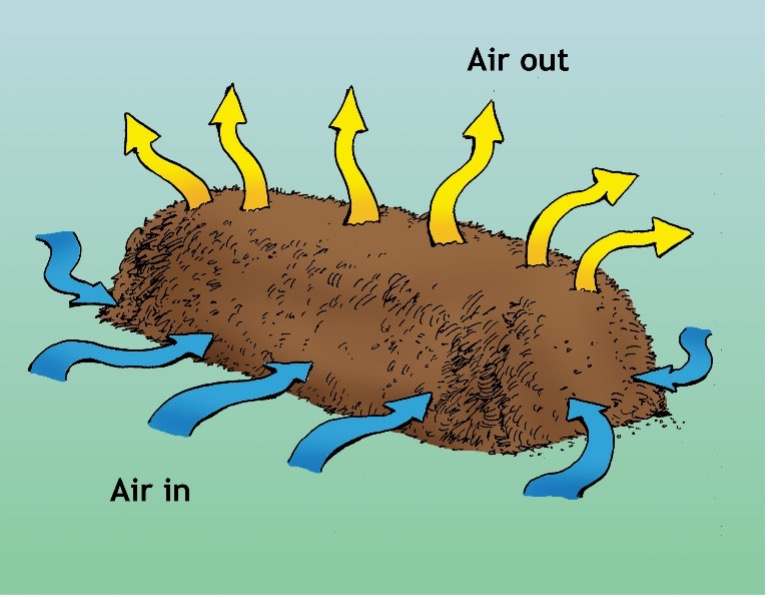
Aerated Static Pile – In the aerated static pile method (also known as the Beltsville Method or Rutgers Method), the compost is not agitated or turned. The initial mixing of the carcasses with the bulking agent must be sufficient to allow proper air flow and effective composting. Aerobic conditions are maintained by mechanically drawing, or blowing air through the pile. The pile is covered with an insulating blanket of four to six inches of finished compost, compost media, or other suitable material to ensure proper temperatures are attained at outer edges of the pile. This approach applies primarily to poultry and other small carcasses.
Animal Carcass(es) – Body(ies) or body parts of dead animals, including but not limited to pets, livestock and poultry. Carcasses may be mixed with manure and bedding or other organic materials which cannot be separated from the animal carcasses.
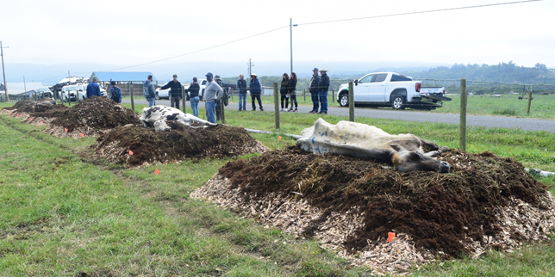
Animals/ carcasses, Large– Animals such as cows and horses weighing 500 lbs or more.
Animals/ Carcasses, Medium-size – Animals such as sheep, goats and deer weighing between 100 and 500 lbs.
Animals/ carcasses, Small – Animals which weigh 100 lbs. or less.
[back to top]
BMP – Best Management Practice – The term “Best Management Practice,” or BMP, originated in the Clean Water Act of 1972, and is now commonly used in the language of environmental management. In agriculture, these are practices, methods or techniques that have been found by subject matter experts to be the most effective and practical means in achieving an objective (such as preventing or minimizing pollution or negative impacts on human or animal health) while making the optimum use of the farm’s resources.
BMP, General – Best Management Practices that have been recommended by Subject Matter Experts for general use. A list of general BMPs serves as a menu of acceptable options that the farmer, business owner or individual may choose from. Not all general BMPs would apply to any specific situation.
BMP, Site Specific – Best Management Practices that are developed or approved by Subject Matter Experts to resolve specific problems based on the conditions observed on a particular site.
Bulking Agent – Relatively dry porous material used to give a compost pile structure and to absorb moisture. Most bulking agents are relatively high in carbon and so are also a carbon source. Examples of bulking agents are sawdust, shavings, dry animal bedding and .
[back to top]
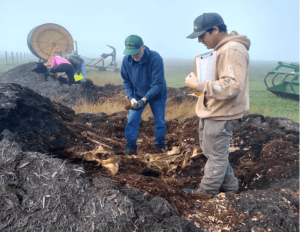
Compost Medium/Material – The relatively dry bulky organic material that forms the matrix within which carcasses or offal are composted.
Composting – The biological decomposition and stabilization of organic matter under mostly aerobic conditions of high temperature (120°F or higher). When oxygen, moisture, nitrogen and carbon are available in the right proportions, the degradation generates considerable quantities of heat, reaching temperatures of 130° to 170° F. All disease-causing organisms are subjected to at least three adverse conditions during composting: heat, toxicity caused by products of decomposition, and microbial antagonism.These conditions are responsible for the virtually complete destruction of pathogenic organisms. The process also results in a humus-like product that has its nutrients in a much more stable form than the uncomposted wastes making it safer and easier to store and use.
[back to top]
Emergency – An unexpected occurrence or set of circumstances demanding immediate action, eg. fire, major disease outbreak, flood, rendering disruption, sustained heat, etc. An emergency exists when multiple carcasses result from a single, unplanned occurrence.
[back to top]
Offal – Unwanted or unused body parts remaining from butchering or slaughtering animals.
[back to top]
Static Pile – The static pile method uses a pile of composting material that is not agitated or turned. The initial thorough mixing of the carcasses or body parts with the compost media is essential to create a uniform mix and contact between all carcasses and the media. Porosity in the pile must be sufficient to allow proper air flow and effective composting. Aerobic conditions are maintained by natural ventilation of the pile that is enhanced by using materials that maintain a relatively high pile porosity. The pile is covered with an insulating blanket of four to six inches of finished compost, compost media, or other suitable material to ensure proper temperatures are attained at outer edges of the pile. This approach applies primarily to poultry and other small carcasses.
[back to top]
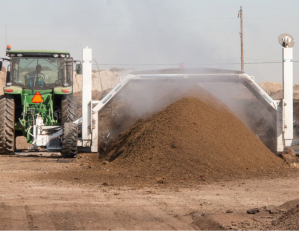
Turned Windrow – The turned windrow system is an approach, in which the compost mixture is placed in rows and turned periodically during the compost cycle. The turning action supplies oxygen through gas exchange, thereby creating natural ventilation. The frequent turning insures the production of a uniform product at the end of the compost process. Success with this system depends on the ability to achieve a thorough mix and aeration through repeated turning. This system only applies to small carcasses, small body parts or ground carcasses.
[back to top]